

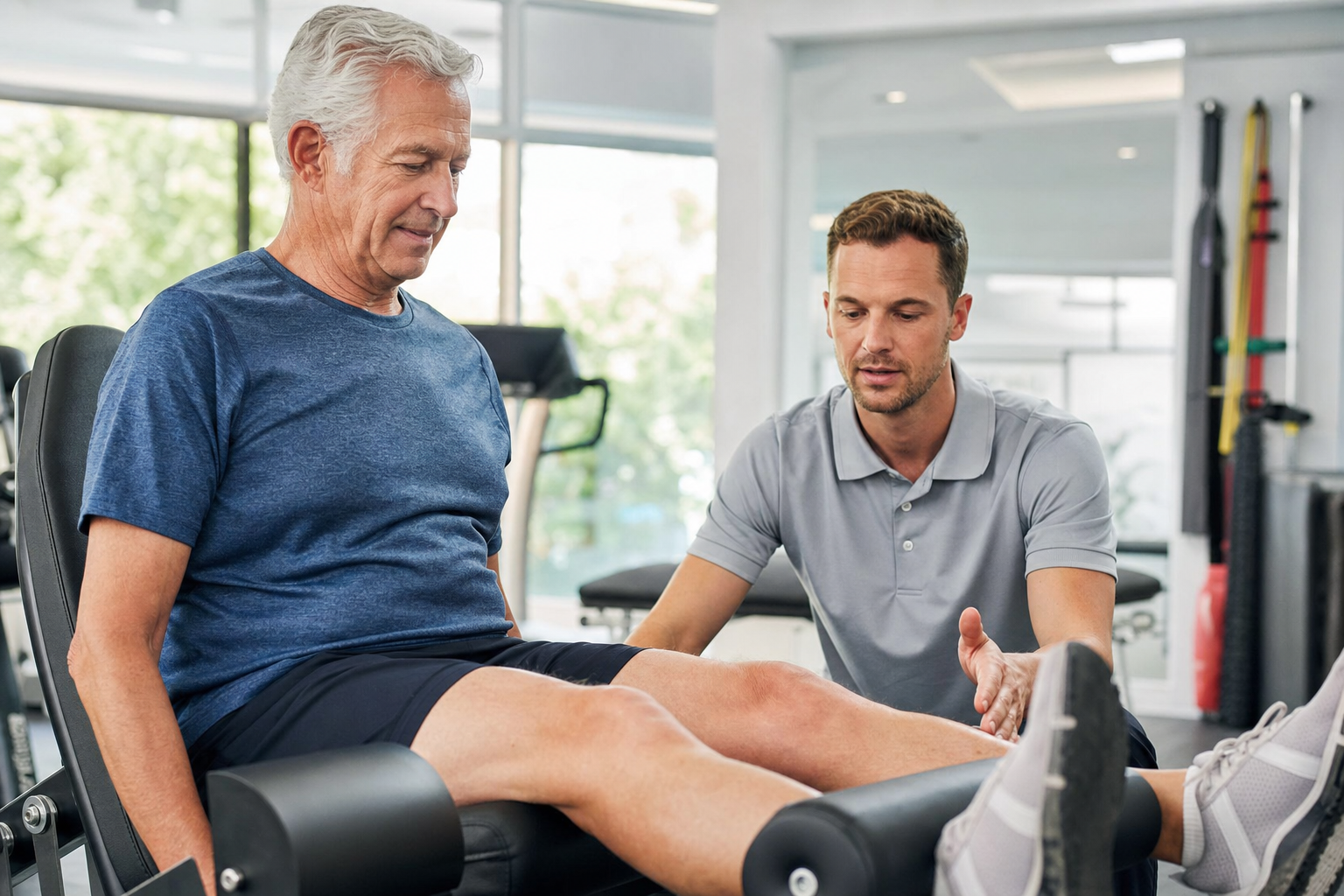
Source credit: Bone & Joint Research, indexed in PubMed: “Using quantitative imaging methods to investigate the association between quadriceps stiffness and knee cartilage volumes”. DOI: 10.1302/2046-3758.157.BJR-2025-0402.R3.
Short summary
A July 3 PubMed-indexed imaging study looked at 82 older adults, average age about 66, to see how quadriceps stiffness and quadriceps strength related to knee cartilage volumes measured by MRI. The researchers used shear-wave elastography ultrasound for passive stiffness, a dynamometer for strength, and MRI measures across tibial, femoral, and patellar cartilage compartments.
The headline finding should be read carefully. Higher quadriceps stiffness showed negative associations with tibial, femoral, and total knee cartilage volumes in the initial models, but those associations were no longer statistically significant after false-discovery-rate correction for multiple testing. In sex-stratified analysis, lower quadriceps strength was associated with smaller patellar cartilage volume in females, while the same relationship was not seen in males.
Why it matters for lifters
For lifters, runners, and older recreational athletes, the study reinforces a practical theme: knee health is not just about avoiding load. Quad strength, stiffness, symptoms, sex-specific differences, and joint structure may interact in ways that are more complicated than a single exercise rule. The paper does not prove that one training style protects cartilage, and it does not show that stiff quads directly cause cartilage loss.
The useful takeaway is more conservative: knee-friendly strength work should be progressed with attention to symptoms, mobility, recovery, and individual history. Older lifters with persistent knee pain, swelling, sharp pain, or sudden performance changes should not self-diagnose cartilage status from training feel alone.
What to watch next
Future studies will need larger samples, longitudinal follow-up, and clearer links between training exposure, muscle stiffness, quad strength, symptoms, and cartilage change over time. The most useful next step for athletes would be research that tests whether specific strength, mobility, and recovery programs can change both function and imaging markers without overclaiming joint-preservation benefits.
Health disclaimer: This article is for informational purposes only and is not medical advice. It should not be used to diagnose, treat, or manage knee pain, cartilage injury, osteoarthritis, or any medical condition. Talk with a qualified clinician before changing training if you have pain, injury, swelling, or a medical condition.