

Source credit: Based on a PubMed-indexed paper in the European Journal of Preventive Cardiology: PubMed PMID 42319895 and DOI 10.1093/eurjpc/zwag322.
A new elite-athlete study suggests that exercise blood pressure readings should be interpreted alongside fitness level and test stage, not treated as a single out-of-context number.
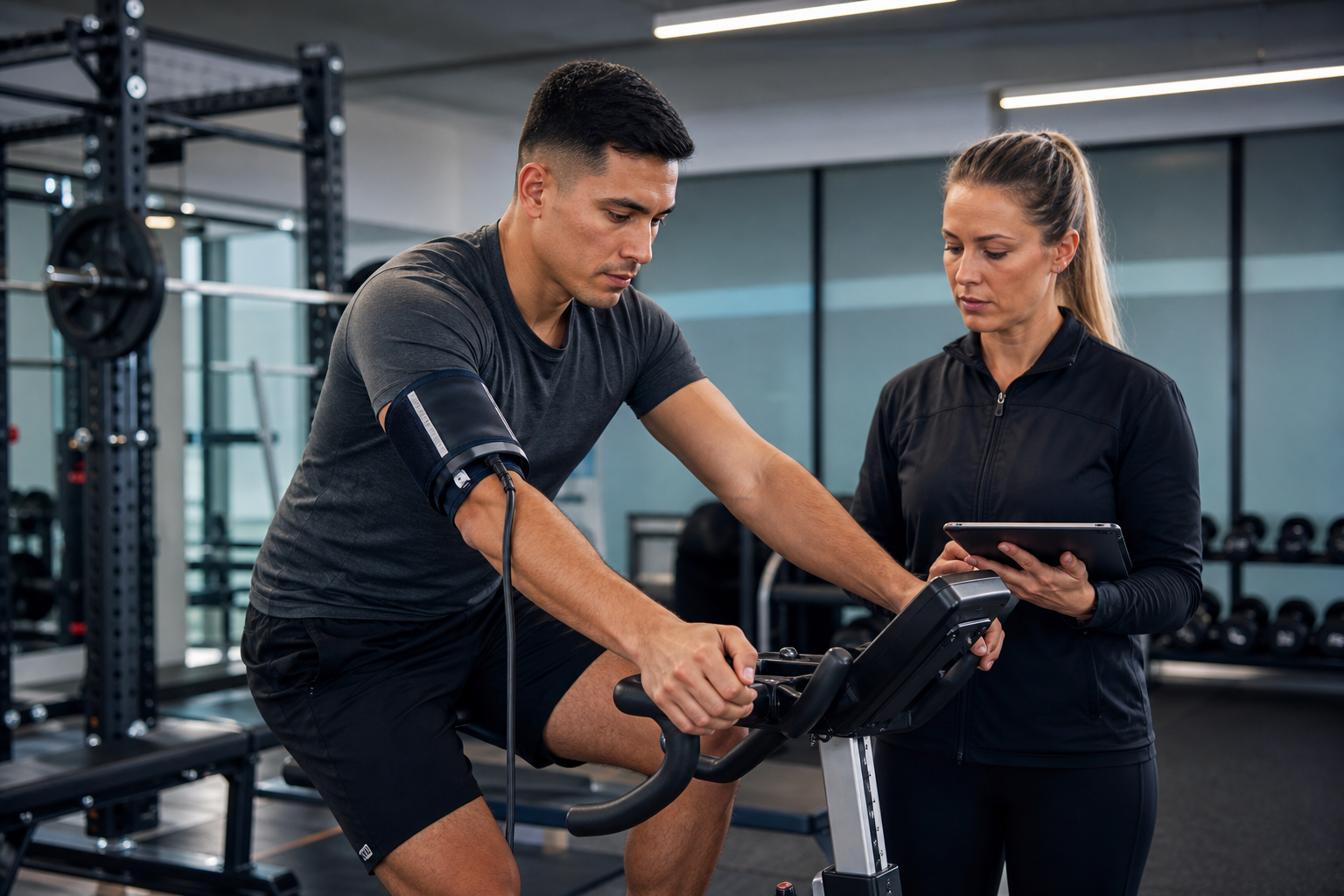
The paper examined 474 healthy male elite athletes from mixed sports who completed standardized maximal graded cycling tests. Researchers focused on systolic blood pressure relative to achieved metabolic equivalents, a fitness-indexed measure sometimes used to flag exaggerated blood pressure response during exercise.
Mean peak systolic blood pressure was about 197 mmHg, while peak systolic blood pressure relative to fitness averaged 15.68 mmHg per MET. The study also found that the ratio changed across workload stages instead of rising in a straight line, and that higher aerobic fitness was strongly linked with lower peak systolic blood pressure relative to achieved fitness.
The authors concluded that athlete-specific and stage-specific reference values may be more useful than applying one general-population comparator across every point of an exercise test. They reported that a commonly discussed 18 mmHg/MET threshold aligned mainly with moderate workloads, while upper reference values around 16 mmHg/MET may better describe the upper range during standardized exercise testing stages in athletes.
Why it matters for lifters
Hard training raises blood pressure during effort, and that response is one reason lifters, bodybuilders, and hybrid athletes should take cardiovascular screening seriously instead of treating gym performance as proof that everything is normal.
The practical message is not that athletes should self-diagnose from a smartwatch, bike screen, or single gym reading. It is that context matters. A high output athlete, a beginner returning to training, and a strength athlete adding conditioning may show different exercise responses even when a resting blood pressure reading looks similar.
For lifters, this supports a more professional approach to testing: use qualified clinicians when there are symptoms or risk factors, track resting blood pressure over time, and treat unusually high exercise responses as a reason to get evaluated rather than ignored.
What to watch next
The study was limited to healthy male elite athletes, so future work should test women, older strength athletes, powerlifters, bodybuilders, and recreational lifters. It would also be useful to see athlete-specific reference ranges for treadmill tests, loaded carries, circuit training, and mixed strength-conditioning sessions.
Until then, the takeaway is measured: exercise blood pressure can be a useful signal, but it needs fitness context, workload context, and medical interpretation before it becomes a decision about training or health.
Health disclaimer: This article is for informational purposes only and is not medical advice. Talk with a qualified health professional before changing supplements, training, or treatment plans, especially if you have high blood pressure, heart symptoms, take medication, or are preparing for competition.