

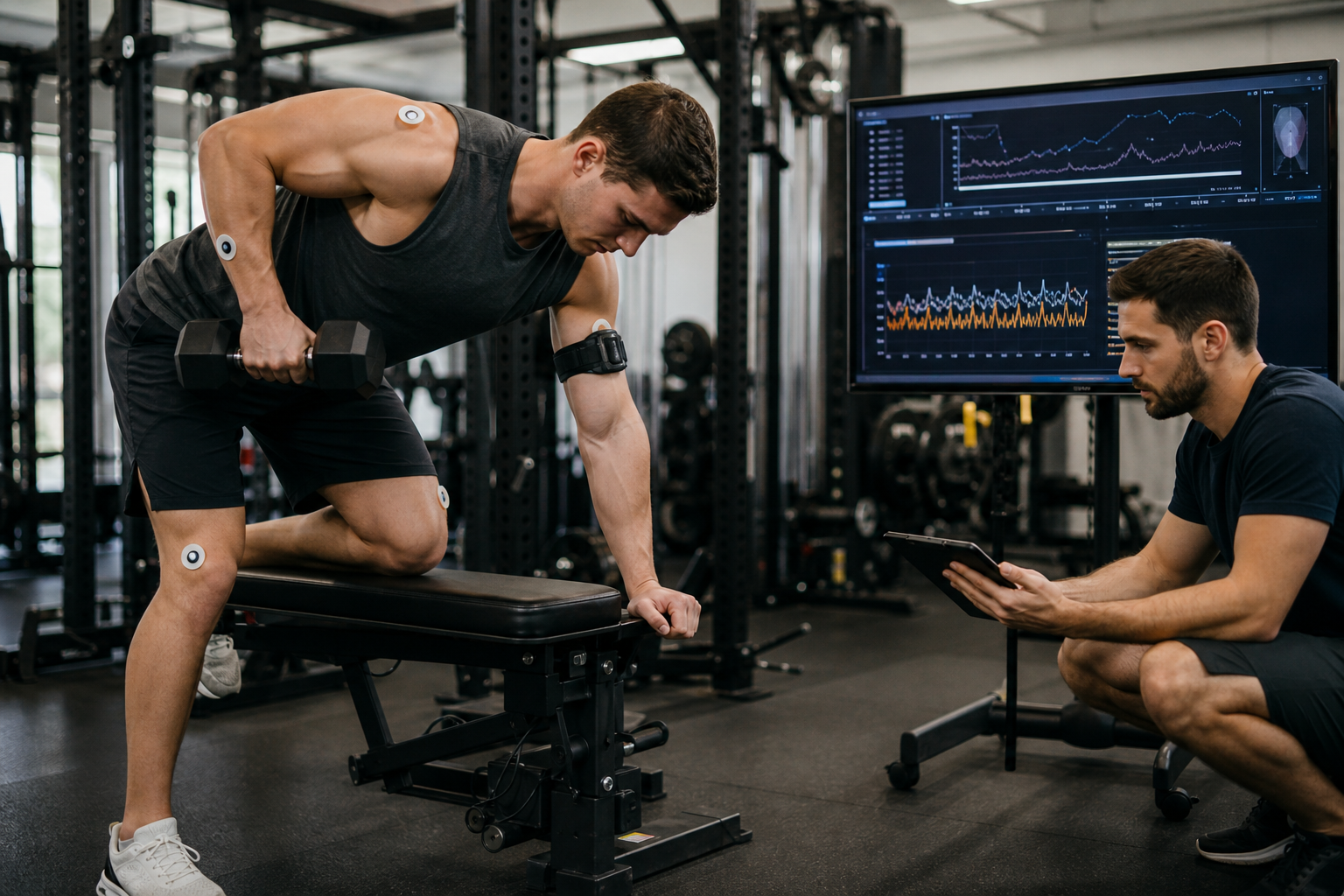
Source credit: PubMed / Molecular Biology Reports, “Succinate as a metabolic-signaling dual-function hub in skeletal muscle: linking exercise adaptation to myopathic dysfunction”. DOI: 10.1007/s11033-026-12237-4.
Short summary: A newly indexed narrative review in Molecular Biology Reports argues that succinate may be more than a fuel-cycle intermediate inside muscle. The authors describe succinate as a possible context-dependent signal that could help connect high-intensity contraction, mitochondrial stress, tissue remodeling, vascular signaling, immune responses, and satellite-cell activity.
The review’s central idea is a “dual-function hub” model. In short bursts, succinate accumulation and release during demanding contraction may be part of the adaptive stress signal that helps muscle remodel after training. In more chronic settings, especially when tied to mitochondrial dysfunction or metabolic disease, sustained succinate elevation may instead track with inflammatory, oxidative, or maladaptive programs.
That distinction is important because the paper is not claiming that succinate is already a validated coaching metric. The authors describe the model as testable and preliminary, with major open questions around timing, concentration, cellular location, receptor availability, transport, and how succinate interacts with the many other signals produced by exercise.
Why it matters for lifters
For lifters, the useful takeaway is not a new hack. It is another reminder that hard sets create layered stress signals: mechanical tension, local energy demand, metabolites, inflammation, blood-flow changes, and repair processes all overlap. Succinate may eventually help researchers explain why some contraction patterns support adaptation while chronic metabolic dysfunction pushes tissue in the wrong direction.
Practically, this does not change the basics: progressive loading, enough recovery, sensible conditioning, adequate nutrition, and symptom-aware programming still matter more than any single molecule. The review is most relevant to coaches, sport scientists, and medically supervised return-to-training settings where future biomarkers might help separate productive training stress from poor recovery or disease-related muscle dysfunction.
What to watch next
Watch for controlled human training studies that measure succinate over time, compare trained and untrained lifters, and connect the signal with actual outcomes such as strength, hypertrophy, fatigue, soreness, mitochondrial changes, and injury or illness recovery. The key question is whether succinate adds actionable information beyond workload, performance, sleep, nutrition, symptoms, and standard lab markers.
Also watch the language around translation. A pathway being interesting in skeletal muscle biology does not make it a consumer supplement target, a wearable-ready metric, or a reason to chase high-intensity work every session. The better use of this research is to sharpen future questions about adaptation and muscle health.
Health disclaimer: This article is for informational purposes only and is not medical advice. Talk with a qualified healthcare professional before changing your training, conditioning, diagnosis, treatment, supplements, or injury-management plan.