

Source credit: PubMed / Journal of Special Operations Medicine, “Prediction Factors Associated with Success in Military Special Operations Courses: A Systematic Review”. DOI: 10.55460/J.Spec.Oper.Med.2026.MST7-23AU.
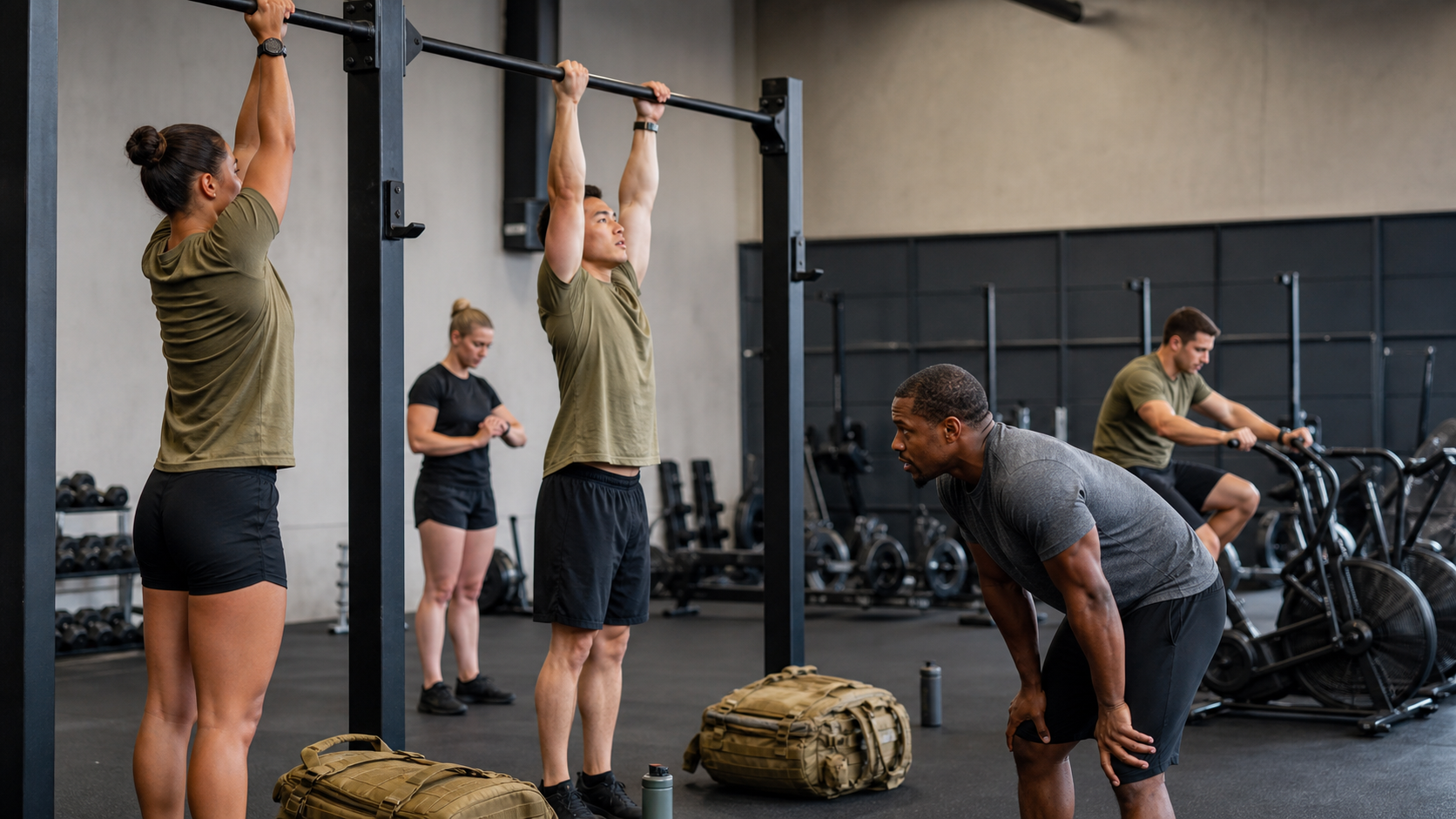
Short summary: A newly indexed systematic review in the Journal of Special Operations Medicine looked at 23 studies on factors tied to passing military Special Operations courses. Across the included research, higher aerobic capacity, pull-up performance, push-up performance, and loaded marching performance showed consistent positive associations with course success.
The review also tracked broader predictors such as anthropometrics, psychological resilience, psychosocial resources, blood markers, and smoking or alcohol patterns. The authors concluded that aerobic capacity, muscular endurance, and psychological resilience may deserve attention in early screening and preparation processes.
For readers outside the tactical setting, the most important qualifier is evidence quality. The authors rated certainty as low to very low, and the courses varied widely by country, duration, and selection demands. That means the findings are useful for context, not a universal formula for building a program.
Why it matters for lifters
Strength athletes often focus on maximum force, but this review is a reminder that real-world readiness usually blends strength endurance, aerobic capacity, body composition, load carriage, and repeatability under fatigue. Pull-ups and push-ups are not advanced metrics, but they are simple stress tests of relative strength, trunk control, shoulder tolerance, and repeat-effort capacity.
The loaded-marching signal is also relevant for lifters who add rucking, strongman carries, firefighter-style conditioning, or hybrid training. It points toward a basic principle: the gym numbers that matter most depend on the task. A bigger total is not the same thing as being prepared to move your body, carry external load, and keep output stable over time.
What to watch next
Watch for prospective studies that test preparation plans before selection events instead of only comparing people after the outcome is known. The most useful future research would separate modifiable training qualities from background traits, then show whether changing those qualities actually improves completion rates, reduces injury, or improves long-term readiness.
For everyday lifters, the safer takeaway is to keep a balanced dashboard: heavy strength work, enough conditioning to recover between efforts, basic bodyweight strength, loaded carries or rucking when appropriate, and recovery habits that keep joints and connective tissue tolerating the work. Anyone preparing for a military, firefighting, law-enforcement, or endurance-heavy selection process should use standards from that organization and get qualified coaching or medical clearance when needed.
Health disclaimer: This article is for informational purposes only and is not medical advice. Talk with a qualified healthcare professional before changing your training, conditioning, diagnosis, treatment, supplements, or injury-management plan.