

Source credit: Based on the PubMed-indexed Maturitas trial, “Exercise intensity influences body composition: a 6-month comparison of high-intensity interval, moderate- and low-intensity training among healthy older adults”, and the June 28, 2026 ScienceDaily summary. DOI: 10.1016/j.maturitas.2025.108763.
A six-month randomized trial in healthy older adults suggests that higher-intensity exercise may have a specific advantage for body composition: reducing fat while better preserving lean tissue.
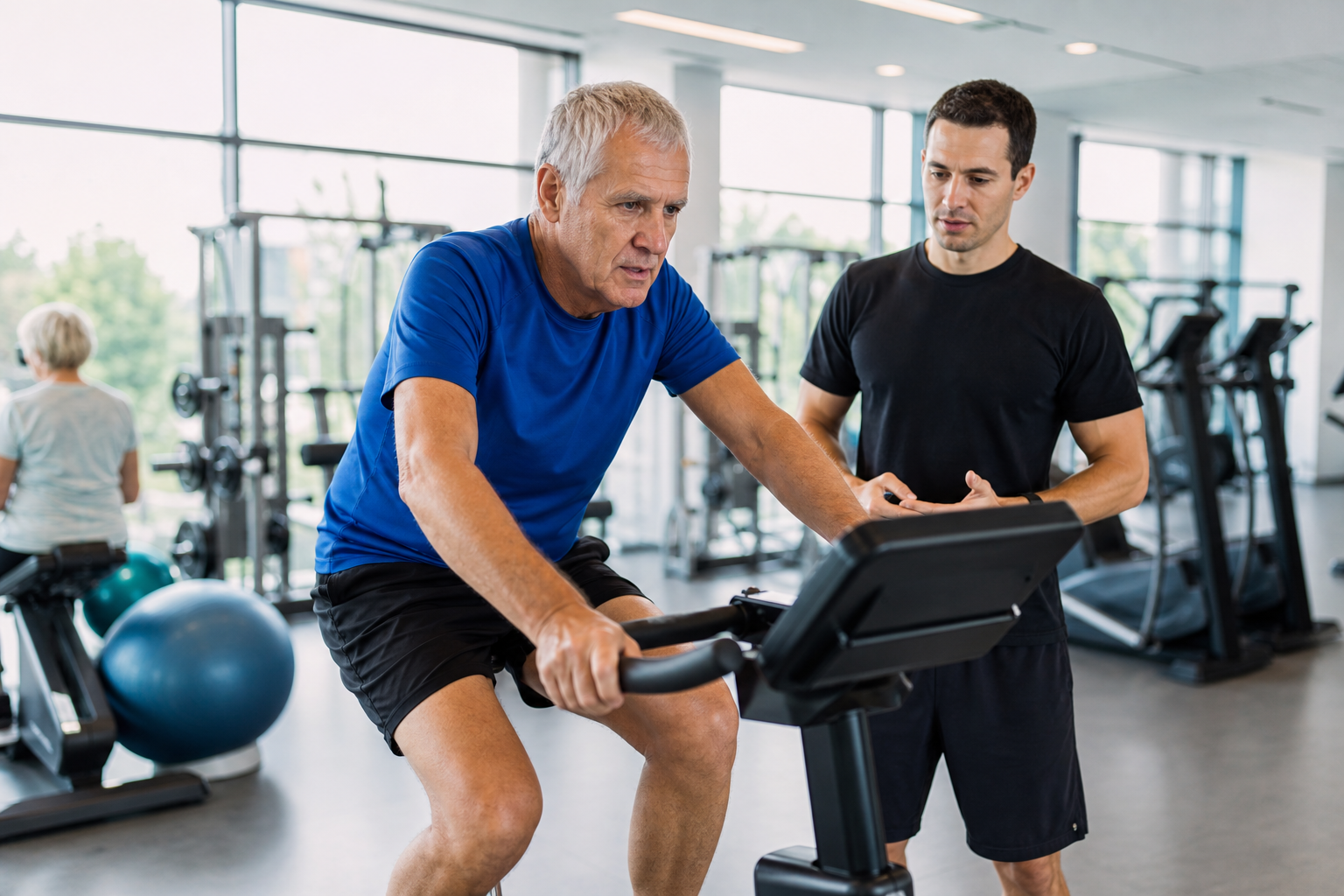
The study included 123 adults with an average age of 72. Participants completed three supervised 45-minute treadmill sessions per week and were assigned to high-intensity interval training, moderate-intensity training, or a low-intensity active control condition. Researchers used DXA scans to track body composition at baseline, three months, and six months.
Both the high- and moderate-intensity groups reduced fat mass more than the control group. The important difference was lean tissue: the moderate-intensity group showed reductions in fat-free mass, while the high-intensity group maintained lean mass and was the only group with a net improvement in body-fat percentage.
The authors were careful not to oversell the result. The changes were small, and the paper noted that they were not clinically meaningful when measurement error and lower-intensity exercise comparisons were considered. Still, the pattern is useful for coaches because body composition in older adults is not only about weight loss.
Why it matters for lifters
For masters lifters and older clients, losing fat while preserving muscle is usually a better target than simply making the scale move. This trial supports the idea that appropriately supervised higher-intensity conditioning can be part of that conversation when the athlete is healthy enough and the progression is controlled.
The takeaway is not that every older adult should jump into maximal intervals. It is that intensity, recovery, and supervision matter. A well-built plan might combine strength training, interval conditioning, low-intensity aerobic work, protein adequacy, and medical clearance for people with cardiovascular, orthopedic, or metabolic risk factors.
What to watch next
Future trials should test how interval training interacts with resistance training, protein intake, medications, joint limitations, and longer follow-up. Lifters should also watch for studies that separate lean-mass preservation from actual strength, power, walking speed, and quality-of-life outcomes.
Health disclaimer: This article is for informational purposes only and is not medical advice. Older adults, people returning to exercise, and anyone with heart, blood-pressure, metabolic, balance, or joint concerns should consult a qualified medical or fitness professional before starting high-intensity interval training.