

Source credit: PubMed record for Sports Medicine, DOI 10.1007/s40279-026-02481-w, published June 30, 2026.
A new review in Sports Medicine argues that exercise support for breast-cancer-related outcomes may eventually need to move beyond broad, one-size-fits-all prescriptions.
The paper does not claim that training is a standalone cancer treatment. Instead, it lays out a precision-exercise framework that would account for tumor, treatment, and patient factors when researchers and clinicians test exercise programs. The review points to biological pathways that may be influenced by exercise, including immune function, inflammation, metabolism, tumor perfusion, body composition, and the gut microbiome.
The cautious part is important. The authors note that observational studies have consistently linked higher physical activity with better survival outcomes, but interventional trial evidence for tumor response and survival is still limited and inconsistent. They frame the precision-exercise idea as hypothesis-generating, not practice-changing proof.
Why it matters for lifters
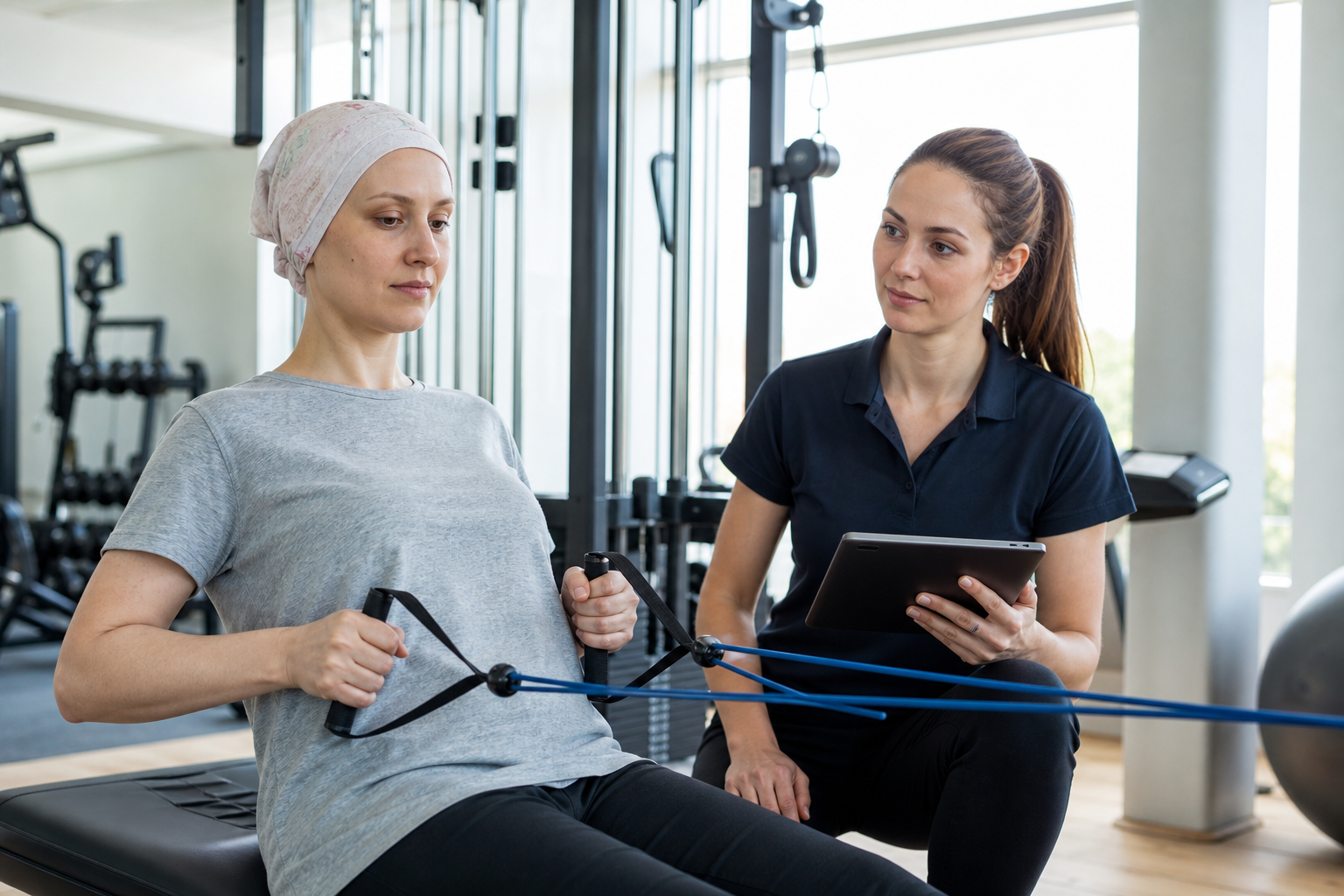
For lifters, the useful takeaway is not that harder training automatically improves cancer outcomes. It is that dose, adherence, treatment status, body composition, fatigue, lymphedema risk, and recovery capacity may all matter when exercise is used in medical settings. That is familiar territory for coaches and athletes, but in oncology it has to be handled through qualified clinical supervision rather than generic gym programming.
What to watch next
Watch for adequately powered trials that compare specific exercise doses and modalities, report adherence clearly, and separate outcomes by treatment context, tumor subtype, baseline fitness, muscle mass, and inflammatory or metabolic markers. Wearables and AI-driven monitoring may help personalize programs, but the key test is whether those tools improve meaningful clinical outcomes without compromising safety.
This article is for informational purposes only and is not medical advice. People receiving cancer treatment or recovering from cancer should talk with their oncology team and qualified exercise professionals before starting or changing an exercise program.