

Source credit: Journal of Strength and Conditioning Research via PubMed PMID 42367066; DOI: 10.1519/JSC.0000000000005556.
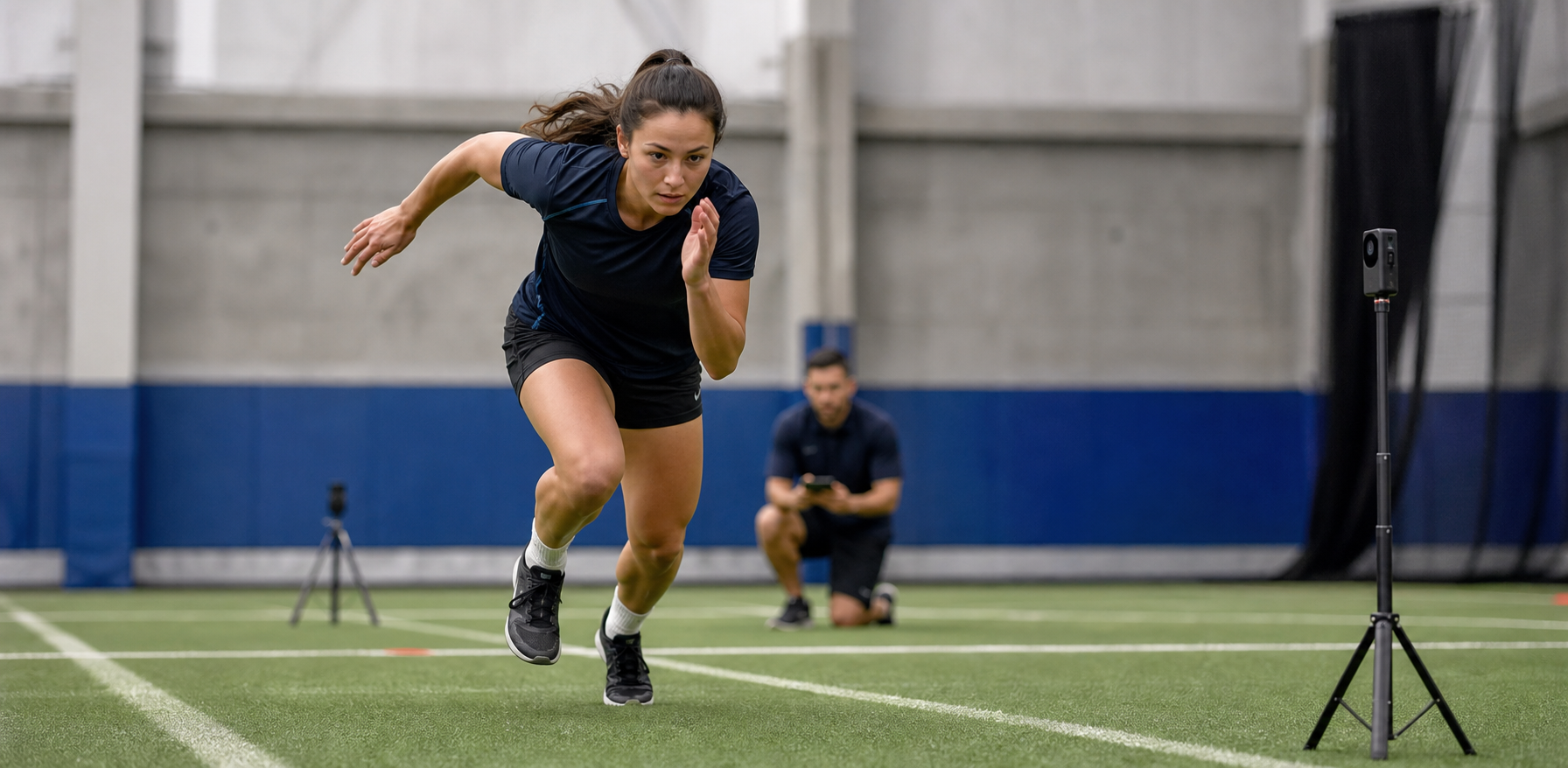
A new Journal of Strength and Conditioning Research paper looked at sprint acceleration in 151 female rugby union players across under-14, under-16, under-18, and senior groups. The athletes performed two 50-meter linear sprints while radar-derived velocity data were used to compare absolute speed markers with relative acceleration measures.
The main takeaway for coaches and athletes is that early acceleration is not captured by a single split time. The authors reported age- and position-related differences in early velocity markers, and they concluded that relative acceleration variables can add complementary information for performance monitoring and programming.
Why it matters for lifters
Many lifters add sprints, sled pushes, jumps, or field-sport conditioning to build power and athletic carryover. This study is a useful reminder that acceleration work should be tracked with context: a faster first 5 or 10 meters, a higher top speed, and a cleaner acceleration curve may reflect different qualities.
For general gym users, the practical lesson is not to chase maximal sprint volume blindly. Sprint work is high output and high stress, so progressions should be gradual, technique-focused, and matched to training age, sport demands, and recovery.
What to watch next
Watch for more field-sport studies that connect acceleration metrics with training interventions, return-to-play decisions, and injury outcomes. The next useful step would be research showing whether coaches can improve specific acceleration profiles with targeted sprint, strength, or resisted-running blocks.
Health disclaimer: This article is for informational purposes only and is not medical advice. Talk with a qualified health professional or coach before starting intense sprint training, especially if you have a history of muscle, tendon, joint, heart, or balance problems.