

Source credit: Based on PubMed PMID 42392615, a 2026 Journal of Strength and Conditioning Research paper. DOI: 10.1519/JSC.0000000000005561.
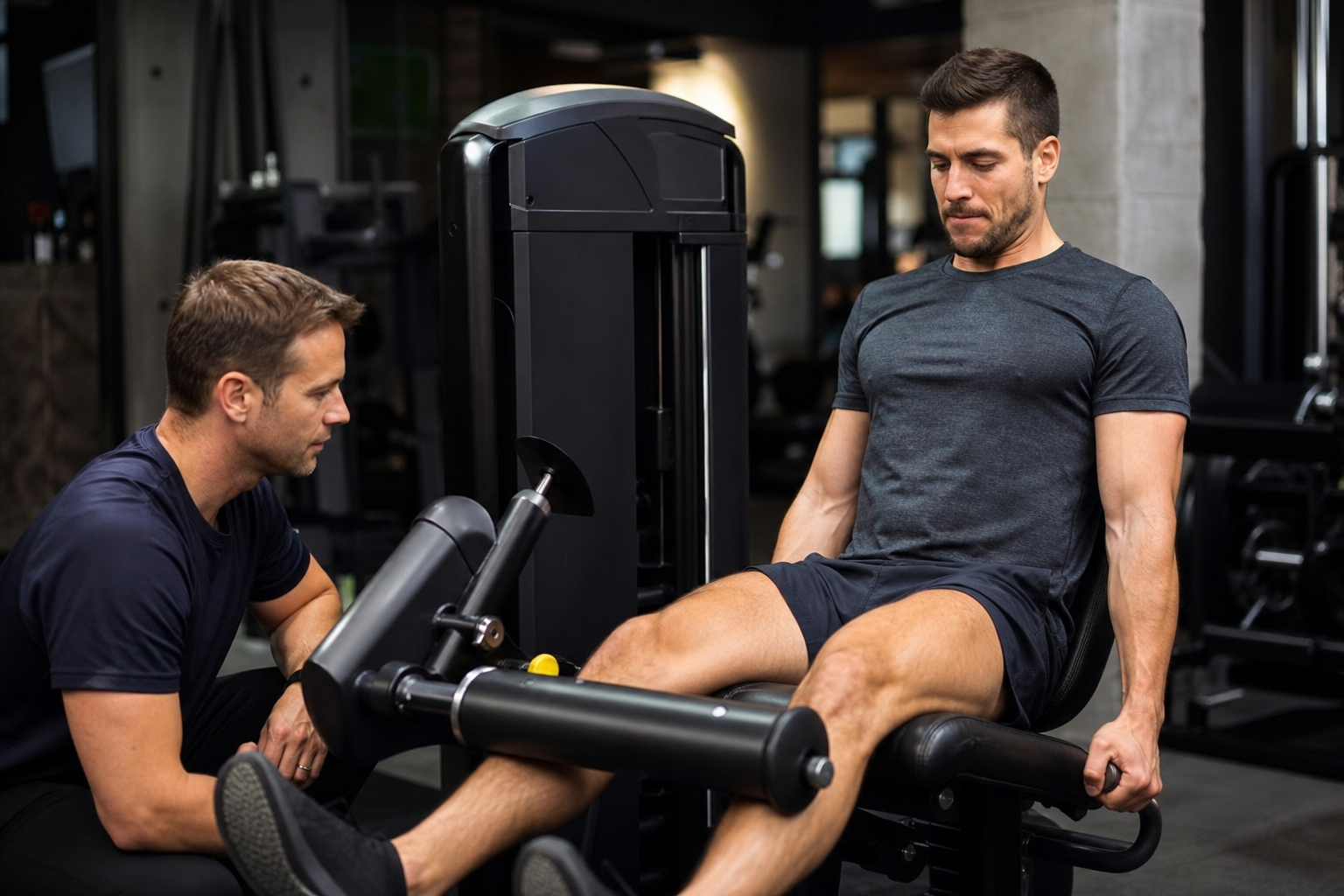
A randomized eight-week resistance-training study compared shortened partial reps, lengthened partial reps, full range-of-motion training, and a control group during knee-extension work. The headline finding for gym readers: moderate-intensity partial reps performed at longer muscle lengths produced quad muscle-thickness changes similar to heavier full range-of-motion training, while shortened partials lagged at several measurement sites.
Why it matters for lifters
The study adds another practical data point to the current lengthened-partials conversation. It does not mean every set should become a half-rep, but it supports the idea that loading the stretched portion of a lift can be a serious hypertrophy tool, especially when joint comfort, fatigue, or programming constraints make heavier full-range work harder to recover from.
For bodybuilders, the useful takeaway is specific: the range where the target muscle is challenged matters. A lighter load in the lengthened range may still drive meaningful adaptation when the execution is controlled and the movement matches the goal.
What to watch next
This was a focused knee-extension study with 45 participants, so it should not be stretched into a universal rule for every muscle group or exercise. Watch for larger studies that compare lengthened partials across movements, trained lifters, different volumes, and real-world bodybuilding programs. Coaches should also keep tracking soreness, joint tolerance, and total weekly workload when adding lengthened partials.
Health disclaimer: This article is for informational purposes only and is not medical advice. Training changes should be matched to your health status, injury history, and guidance from a qualified professional when needed.