

Source credit: Based on the PubMed-listed BMC Cancer article, PubMed 42343234, DOI 10.1186/s12885-026-16399-z.
A new BMC Cancer pilot study suggests that a remotely delivered progressive resistance-training program may be practical for some adult sarcoma survivors who are rebuilding physical function after treatment.
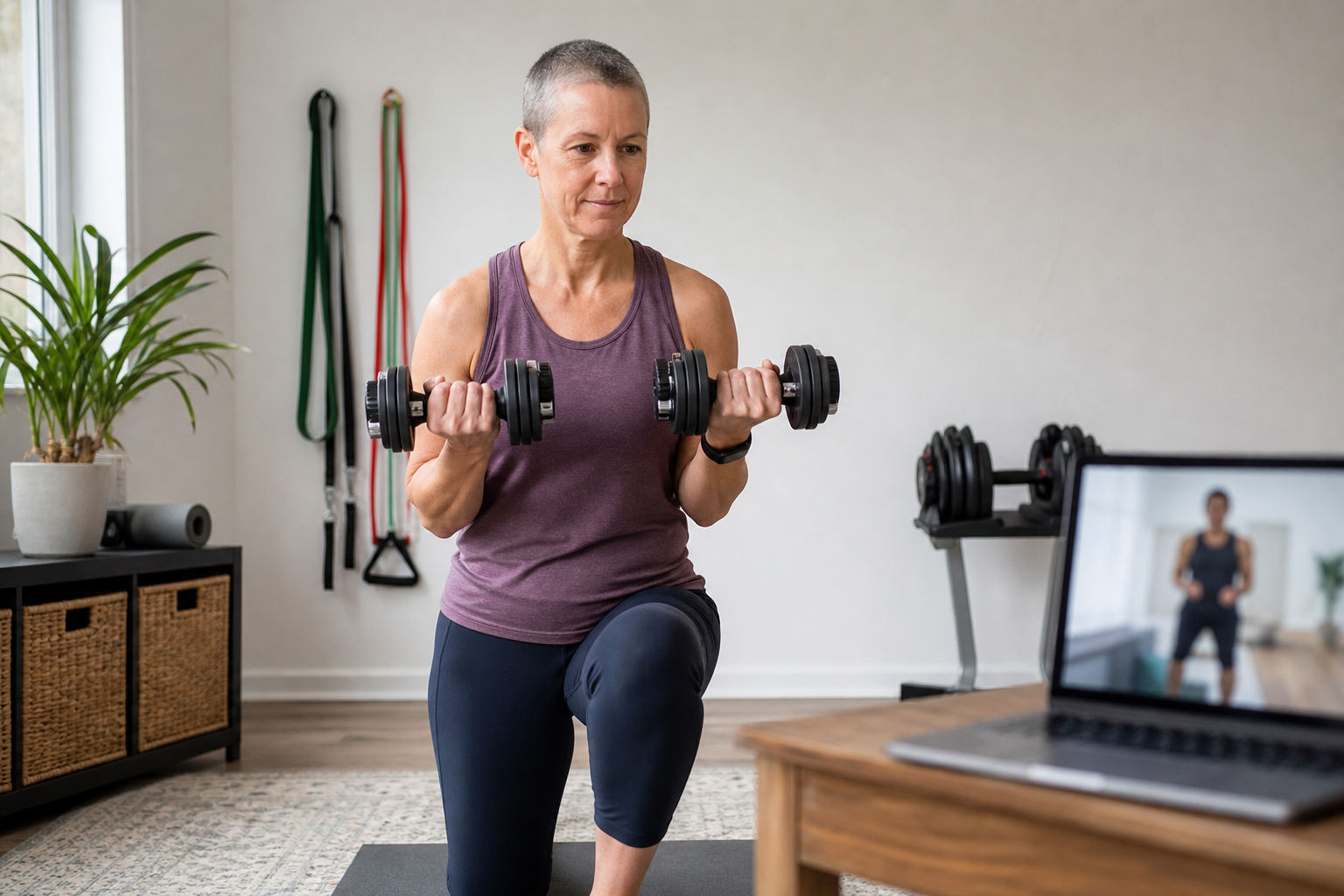
The study enrolled 10 extremity sarcoma survivors, ages 27 to 69, who were more than two years beyond final treatment and had no evidence of recurrent disease. All had undergone surgery and chemotherapy. The 12-week program paired one unsupervised session each week with one supervised session delivered by videoconference, with exercises tailored to each participant’s capacity.
Retention was 90%, and adherence to the twice-weekly exercise sessions was 86%. The researchers reported that remote delivery was feasible and safe in this small group, with improvements in several health-related quality-of-life measures. Fatigue scores also moved in a favorable direction, although the fatigue result did not meet a conventional statistical-significance cutoff.
The limitations matter. This was a small, single-arm pre-post pilot, not a randomized trial. Objective physical-function testing was also disrupted during the COVID pandemic, leaving incomplete short physical performance battery data. The study is best read as a feasibility signal, not proof that one remote strength program is the definitive prescription for sarcoma survivors.
Why it matters for lifters
For lifters, coaches, and clinicians, the study reinforces a practical point: resistance training can often be adapted to the athlete in front of you, including people returning from major illness, surgery, or long periods of deconditioning. The program was individualized, progressive, and supervised, which is different from handing someone a generic workout template.
The remote format is also relevant beyond cancer survivorship. Many lifters train at home, travel often, or need coaching when access to a gym or clinic is limited. A structured video-supported setup may help preserve accountability while still allowing exercise selection, loading, and volume to be adjusted around recovery status.
For bodybuilding audiences, the takeaway is not to chase aggressive volume after a health setback. It is to rebuild deliberately: match exercises to current capacity, progress gradually, monitor fatigue, and coordinate with qualified medical or rehabilitation professionals when training after cancer treatment or another serious diagnosis.
What to watch next
The next step is a larger controlled trial that can compare remote progressive resistance training with usual care or another active intervention. That would help clarify which outcomes change, how much improvement is realistic, and which sarcoma survivors are most likely to benefit.
Also watch for more specific exercise-prescription details: starting loads, progression rules, supervision frequency, adverse-event tracking, and how programs should change for upper-extremity versus lower-extremity sarcoma histories.
Health disclaimer: This article is for informational purposes only and is not medical advice. Anyone returning to training after cancer treatment, surgery, chemotherapy, or a major medical event should work with qualified health professionals before starting or changing an exercise program.